Things and Stuff. How is the reconstruction of home encoded in ojbects of domesticity?
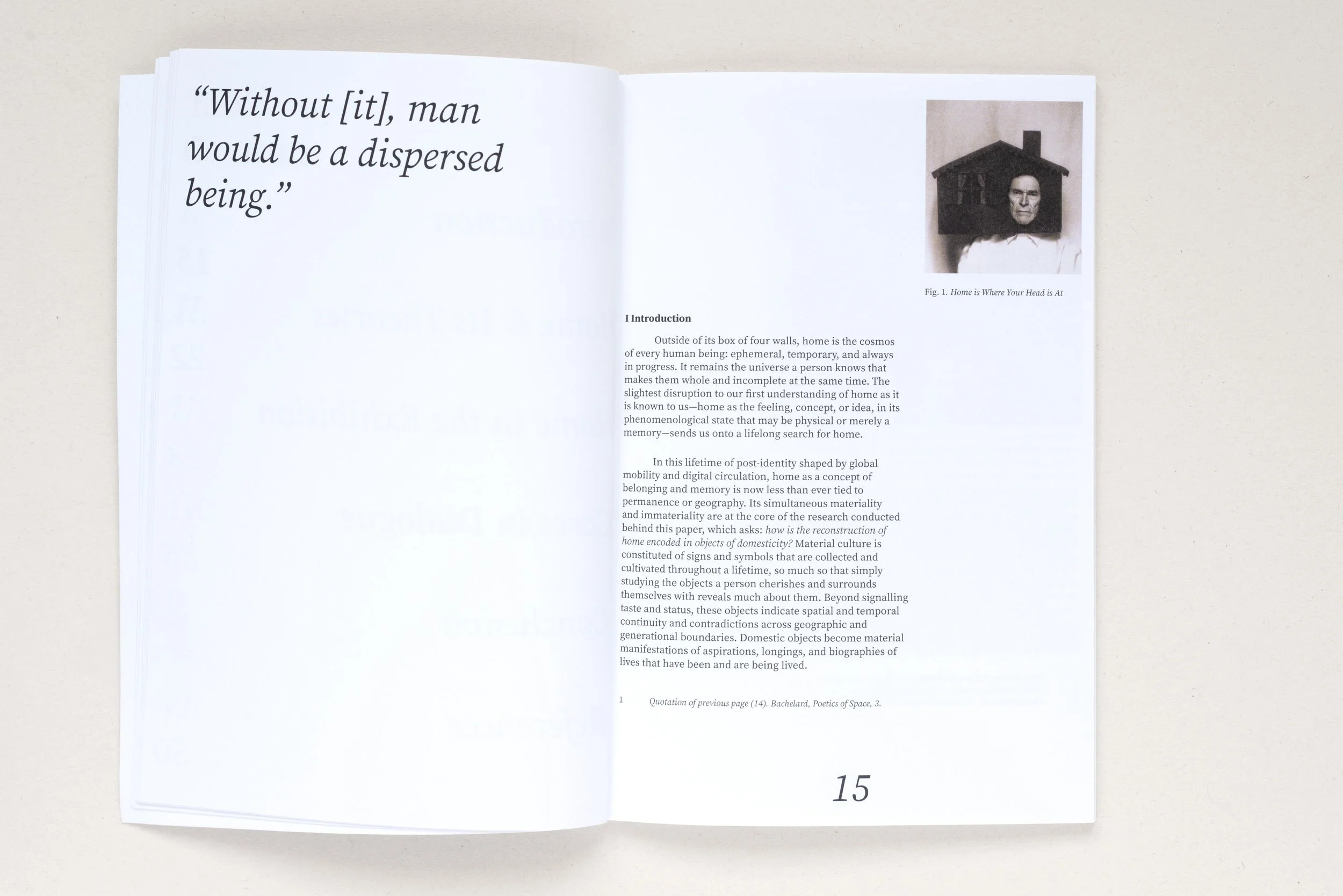
Home is never only a house. It is a landscape of nostalgia, a constantly evolving universe that holds memory, longing, and identity together, even as it remains fleeting, incomplete, and ever-evolving. It is the anchor that holds people together, whether it be a child or a nation; without it, humans lose all sense of orientation. Yet in all of its importance, the definition of home is unfixed, unbound, and dispersed, as a space that is untied to any specific geography or location. It is a practice, a lifelong process of homing, in which people negotiate belonging and selfhood through memory, imagination, and the material culture that surrounds them. Domestic objects—furniture, photographs, mementos, media—emerge as the tools for the phenomenological experience of home, the ones that remind us of a time, of a smell, or a face. They are repositories of personal and collective memory, material embodiments of longings, and markers of identity. As mundane as they are, they anchor the feeling of home and mediate the relationship between ‘here’ and ‘there,’ or between ‘now’ and ‘then,’ or even between ‘me’ and ‘them.’
How can objects be responsible, active agents in social spaces of meaning production? Diasporic homes and exhibitions can both be characterized as opposite ends of the same domesticity spectrum. Where the diasporic home is overloaded with questions, lived meanings, and embodied knowledge, the exhibition space is as blank and devoid of meaning as can be. What is then reconstructed inside the exhibition becomes a critical tool for examining how artists and the public occupy the same space. One imbues it with representational symbols, aspiring to narrate a story; the other enters blindly into a space and is met with a plethora of signs. The exhibition space becomes a space of meaning production and negotiation, wherein both actors operate based on their own internal worlds; however, their overlap is made possible by their imaginative capabilities to transport themselves into other universes.
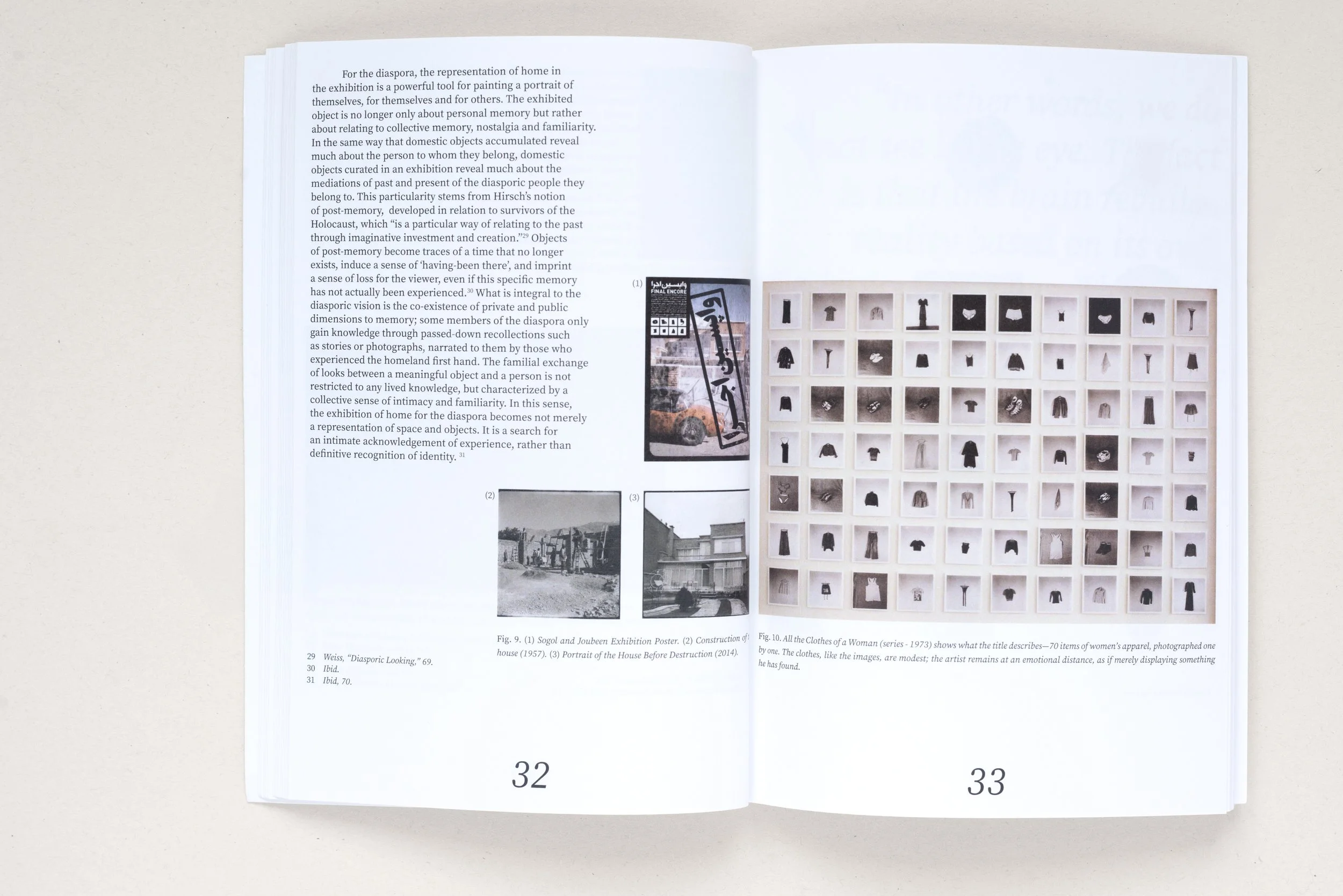
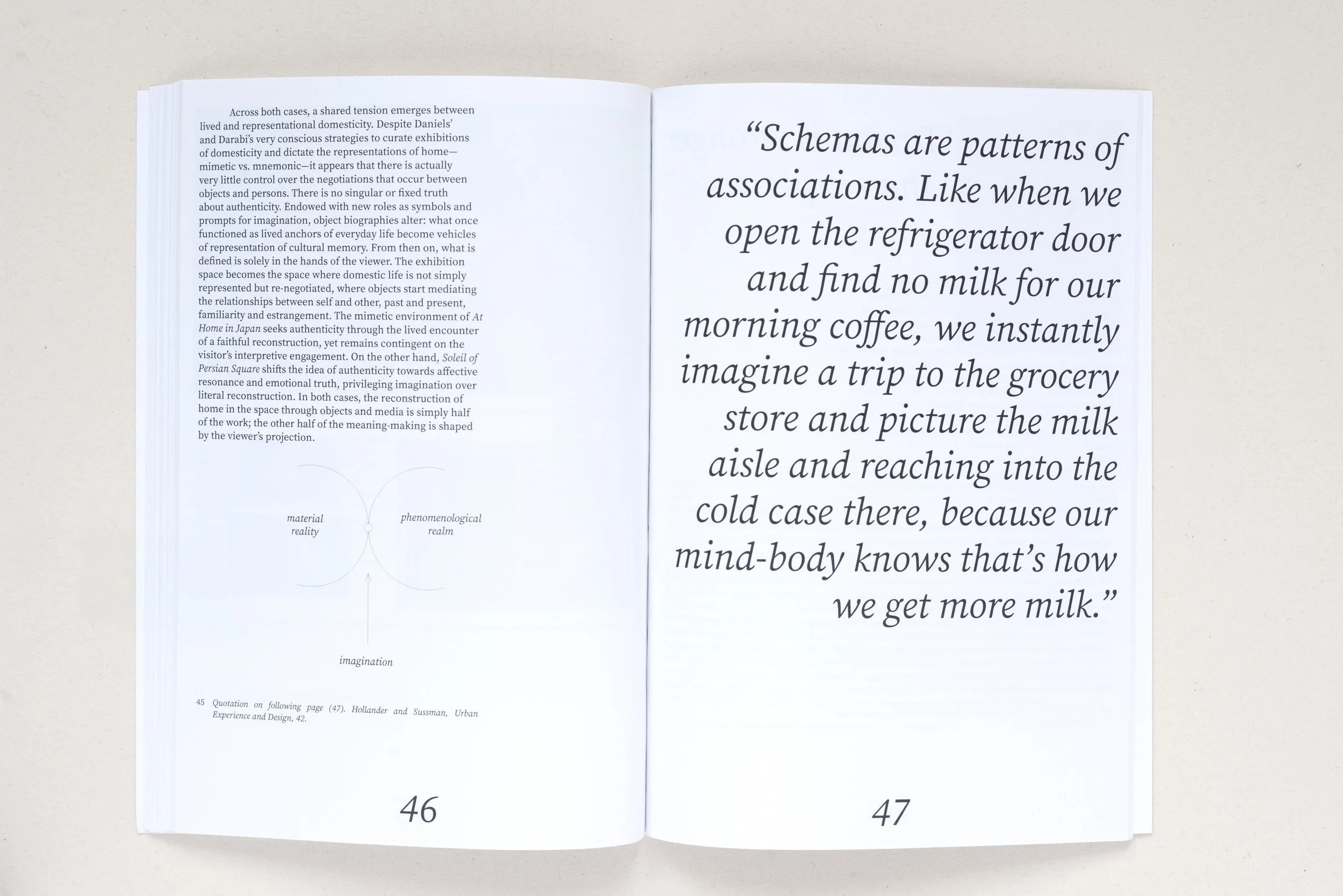
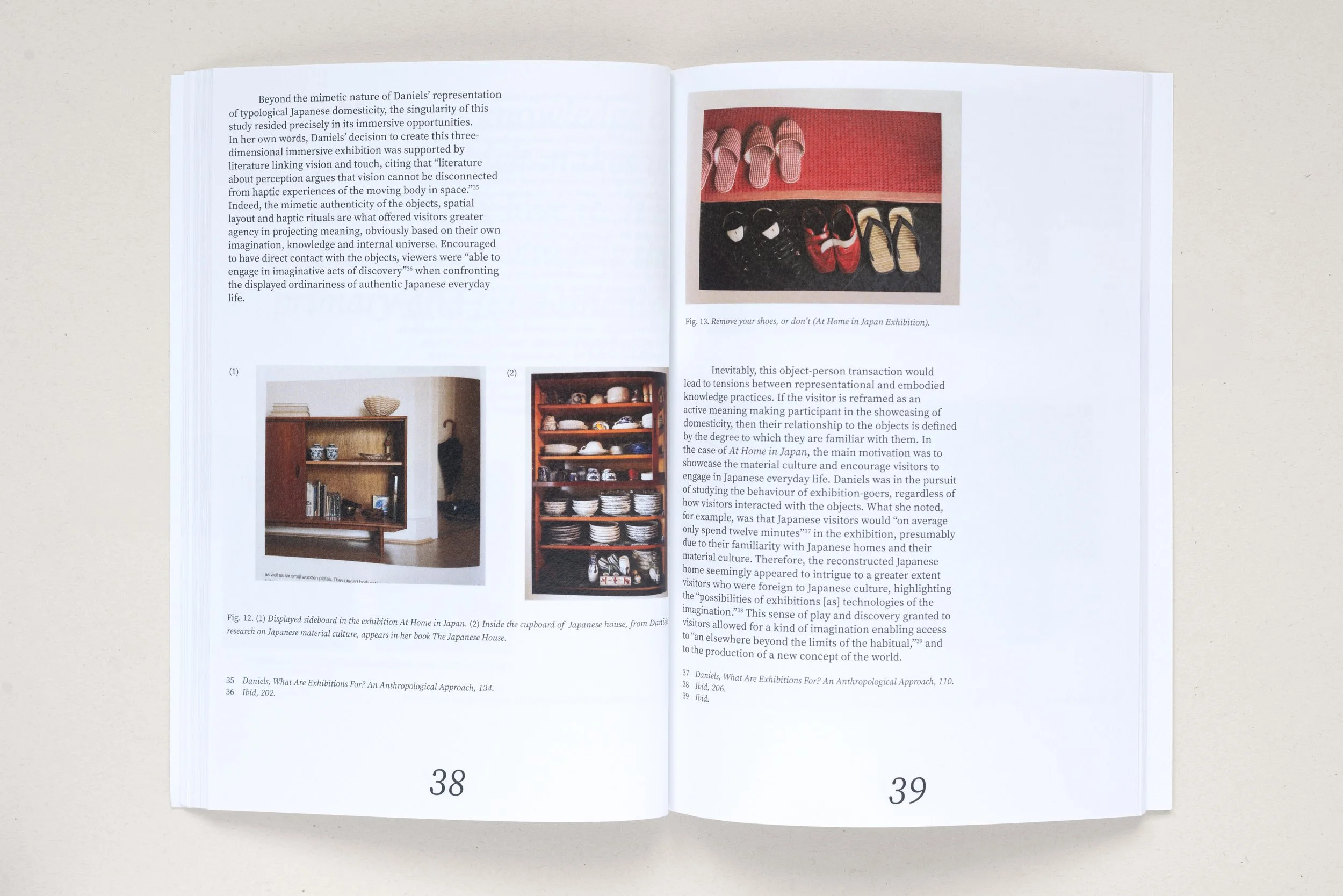
The aim of this body of research is to investigate the ways in which domestic objects reconstruct home, particularly in diasporic contexts, and how these reconstructions are performed and experienced within exhibitions. A comparative methodology examines two distinct exhibitions in order to illuminate the spectrum of domestic representation. Inge Daniels’ At Home in Japan creates an immersive, mimetic reconstruction of Japanese domesticity, where visitors encounter everyday life through touch, sight, and spatial engagement. In contrast, Hannah Darabi’s Soleil of Persian Square operates through mnemonic and affective strategies, using photographs, music, and media to evoke Iranian diasporic memory. Questions of authenticity, relatability, and affective resonance arise from both cases, but they both foreground the same idea: objects are not passive. They carry agency and memory and have the power to transform and inflict particular experiences; what those experiences will be then depends on the internal universe of the viewer. By studying the domestic object in the exhibition, this study will reveal how domestic objects transform abstract internalized notions of home into tangible, shared, and deeply human experiences. Various theories and philosophies explain the surreal and existential questions regarding how humans make meaning in life. This paper concerns itself with the idea that imagination, which is the creative faculty of the mind, is the most powerful tool at the disposal of humankind to make any meaning of anything whatsoever. As a force of psychic production, imagination is what allows for the attachment to inanimate, functional artefacts, onto which we project all sorts of meanings and aspirations. This affectivity within object-person transactions is the internal commitment to the pleasure of personal imagination. Human transcendence— the ability to experience the world beyond the reductionism of utilitarianism—is precisely due to the faculty of imagination.
21 × 15 cm
59 pages
yekta.khalaji@gmail.com